
Farming Is Loud Work: Why Hearing Protection Should Be Essential Farm Equipment
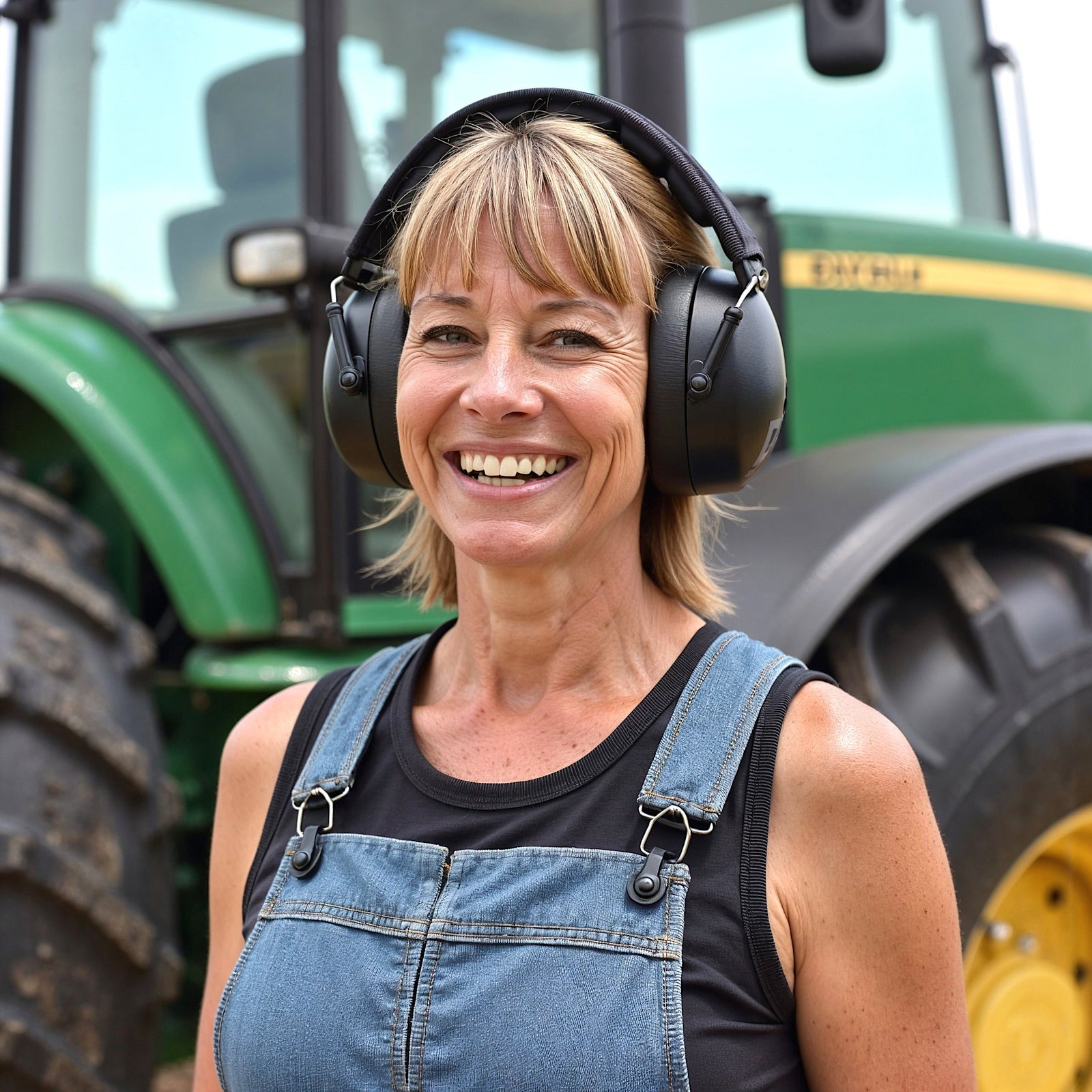

Farmers know that agricultural work comes with risks. Heavy machinery, unpredictable animals, chemicals, heat, dust, and long working hours all demand constant attention to safety. But one occupational hazard can be much easier to overlook precisely because its damage often happens gradually: noise.
New research highlighted by RFD-TV provides another reminder that hearing loss is a serious concern for people who work in agriculture.
According to a recent RFD-TV report, San Diego State University researcher Professor Laura Coco found that 63% of the farmworkers studied had high-frequency hearing loss, compared with a national prevalence of approximately 40%. Researchers also measured noise during agricultural tasks and found that some exceeded the recommended occupational exposure level of 85 decibels.
Those findings should get the attention of anyone who spends significant time around farm equipment.
The Farm Can Be a Noisy Workplace
Unlike a single obviously loud event, agricultural noise can become part of the background of everyday life. Tractors, mowers, combines, chainsaws, grain-handling equipment, power tools, generators, and other machinery may be operated for hours at a time.
That repeated exposure matters.
The National Institute for Occupational Safety and Health (NIOSH) considers noise hazardous when it reaches 85 dBA or higher. One practical warning sign is simple: if you have to raise your voice to talk to someone roughly an arm's length away, the environment may be loud enough to pose a hearing risk over time.
And the problem extends well beyond one study. Current NIOSH statistics indicate that approximately 30% of workers in agriculture, forestry, fishing and hunting have been exposed to hazardous workplace noise during the previous year. About 14% report hearing difficulty, while 13% report tinnitus. Perhaps most strikingly, 74% of noise-exposed workers in these industries report not wearing hearing protection.
Hearing Damage Can Sneak Up on You
One of the dangers of noise-induced hearing loss is that it doesn't necessarily announce itself.
There may be no dramatic moment when someone realizes, "I just damaged my hearing." Instead, repeated exposure can accumulate over years. Conversations may gradually become more difficult to follow. Someone may find themselves turning up the television or asking others to repeat themselves. Ringing or buzzing in the ears—tinnitus—may appear.
By then, the underlying damage may be permanent.
NIOSH emphasizes an important distinction: occupational hearing loss is permanent, but it is also preventable.
That's why hearing protection makes the most sense as a routine precaution rather than something you begin using only after noticing a problem.
Make Hearing Protection Part of the Job
We don't wait until something hits our eye before putting on safety glasses. We don't wait until we're injured before deciding that a seat belt was a good idea. Hearing deserves the same preventive mindset.
Professor Coco recommended that agricultural operations measure noise levels, keep hearing protection readily available around noisy equipment, educate workers about hearing loss, and encourage consistent use. For younger workers, she specifically noted properly fitted earmuffs as an option when conventional earplugs are too large. She also emphasized the importance of maintaining the ability to hear necessary communication and warning signals.
NIOSH similarly recommends reducing exposure when possible, taking breaks from noisy activities, properly maintaining equipment, and consistently wearing appropriate hearing protection in noisy environments.
Consistency is key. Hearing protection sitting in the barn or truck doesn't help when you're operating loud equipment in the field.
Protect the Hearing You'll Need Tomorrow
America's farmers and agricultural workers spend their lives doing difficult, essential work. Hearing loss shouldn't simply be accepted as an unavoidable part of that work.
At Decibel Defense, hearing protection is what we do. Our passive hearing-protection earmuffs are designed to provide serious noise reduction without batteries, electronics, or complicated settings—making them a practical option to keep nearby when working around loud tools and machinery.
The lesson from the latest research is straightforward: don't wait until you notice hearing loss to start protecting your ears.
Whether you're running a tractor, mowing acreage, working around power equipment, or tackling another noisy job on the farm, make hearing protection part of the routine.
Your farm equipment can be replaced.
Your hearing can't.
Source: RFD-TV, “San Diego Researchers Find High Rates of Hearing Loss Among Farmworkers,” September 23, 2026.