
Hearing and Aging: Protecting What You Have Before It’s Gone
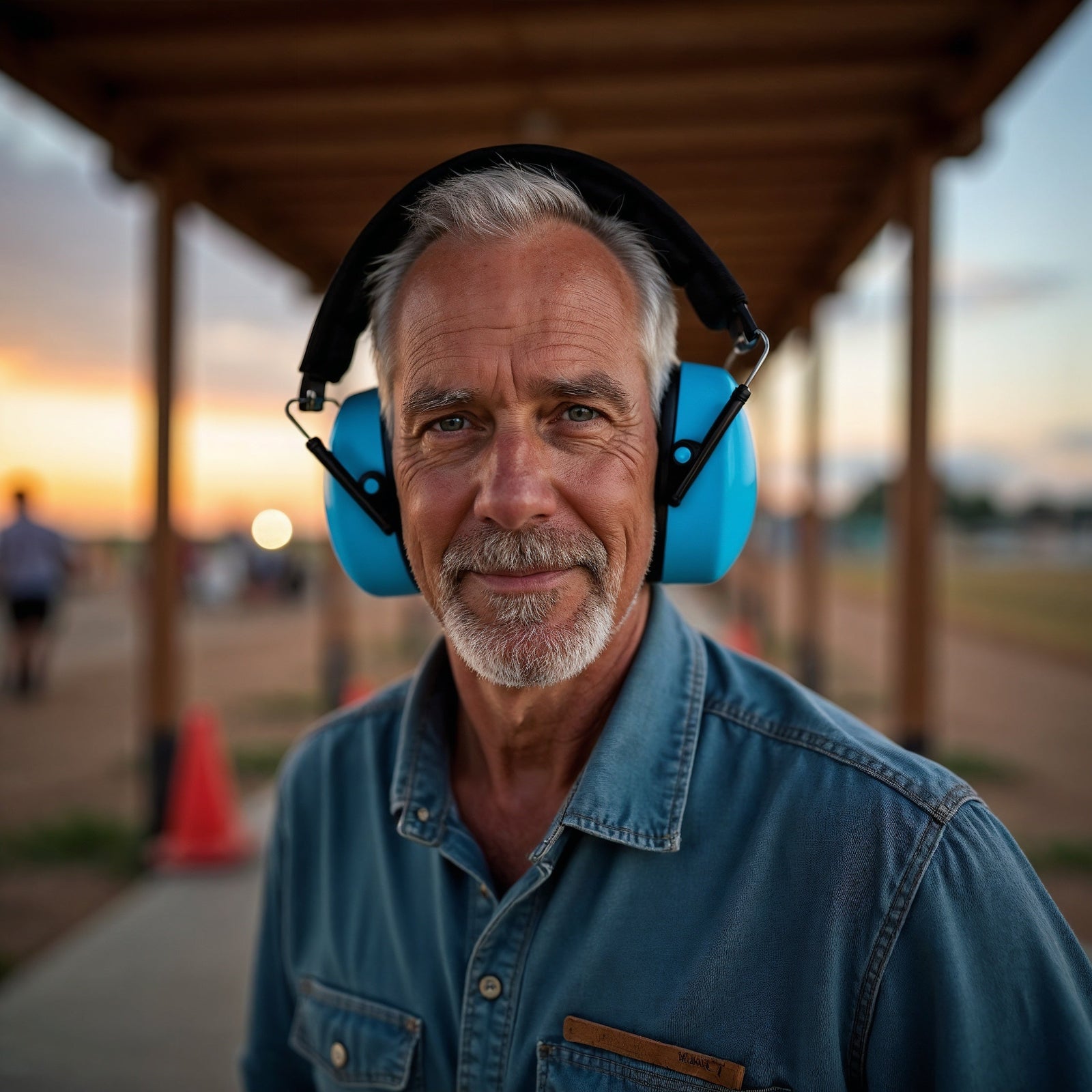

We tend to think of aging as something we can see: gray hair, changing skin, perhaps a little more deliberation when getting out of a chair. But some of the most consequential changes occur quietly. Hearing is one of them.
Age-related hearing loss, known medically as presbycusis, develops gradually, often so subtly that we accommodate it before we recognize it. The television becomes a little louder. Conversations in crowded restaurants become harder to follow. Certain voices seem less distinct. Eventually, asking someone to repeat themselves becomes commonplace.
As the Mayo Clinic explains in its discussion of hearing and healthy aging, changes to our auditory system accumulate over a lifetime. Aging itself plays a role, but so does something over which we have considerably more control: our cumulative exposure to noise.
Hearing Loss Is Often the Product of a Lifetime
Hearing depends upon an extraordinarily delicate biological system. Sound waves ultimately reach the cochlea of the inner ear, where specialized sensory hair cells help transform vibration into electrical signals that the brain interprets as sound.
Over time, these structures can deteriorate. Unlike a cut on the skin or a broken bone, however, damage to the sensory cells responsible for hearing generally does not simply heal.
That makes hearing conservation fundamentally different from many other aspects of health. The objective isn't merely to address hearing loss once it becomes noticeable. It is to preserve the hearing you have today for the person you will be decades from now.
Mayo Clinic notes that more than half of Americans over age 75 experience some degree of age-related hearing loss. Aging and chronic exposure to loud noise are both important contributors.
The two can also compound one another. We cannot prevent ourselves from getting older, but we can reduce the unnecessary acoustic punishment our ears accumulate along the way.
Think in Terms of Noise Exposure, Not Just “Loud”
One of the most useful principles in hearing conservation is that risk depends upon both intensity and duration.
A sound does not have to be painfully loud to matter. Repeated exposure to elevated noise can accumulate over years, while extremely loud sounds—such as gunfire—can cause permanent damage after very brief exposure.
Consider the environments many of us encounter throughout adulthood: lawn equipment, woodworking tools, construction equipment, motorcycles, sporting events, concerts, workshops and shooting ranges. Mayo Clinic specifically recommends limiting exposure, taking breaks from prolonged noise and wearing hearing protection during loud activities.
This leads to a useful shift in perspective: hearing protection isn't merely occupational safety equipment. It is an investment in healthy aging.
What Can You Do Today?
Some age-related changes are unavoidable. Unnecessary noise exposure isn't.
First, become conscious of volume. If an environment requires you to raise your voice significantly to communicate with someone nearby, treat that as a warning. Reduce your exposure when possible.
Second, turn down personal listening devices. Headphones make it remarkably easy to expose the ears to elevated sound for hours without realizing how much acoustic energy is accumulating.
Third, give your ears recovery time. When exposure to loud environments is unavoidable, reducing its duration and taking breaks can matter.
Fourth, have your hearing tested. A baseline hearing evaluation provides useful information before problems become severe. Mayo Clinic recommends considering regular testing particularly for people exposed to significant noise and seeking evaluation when changes become noticeable.
And finally, when you know you're entering a loud environment, use actual hearing protection.
Why Passive Hearing Protection Matters
There is something reassuringly straightforward about passive hearing protection: it does not attempt to electronically disguise noise. It creates a physical barrier between hazardous sound and the auditory system.
A properly fitted passive earmuff uses its ear cups, acoustic materials and seal around the ears to attenuate incoming sound. There are no batteries to charge, electronics to activate or software settings to remember. You put it on, and it works.
For serious noise exposure, look for hearing protection carrying a Noise Reduction Rating (NRR). Mayo Clinic specifically advises choosing properly fitting hearing protection and notes that hearing protectors are labeled with noise-reduction ratings; it also recommends snug-fitting earmuffs—and, in particularly loud situations, combining earmuffs with earplugs.
That distinction matters. Hearing protection should not merely make an environment feel quieter. Its purpose is to reduce the potentially damaging sound reaching your ears.
Protect the Hearing Your Future Self Will Depend Upon
At Decibel Defense, this philosophy is at the heart of what we do.
Our professional passive earmuffs are designed around a simple idea: the hearing you preserve today is hearing you get to keep tomorrow. Our flagship professional earmuffs provide an independently tested 37 dB NRR, require no batteries or electronics, and are designed for demanding environments including shooting, construction, industrial work, lawn care, power-tool use and other high-noise activities.
No technology can stop the passage of time. But aging does not mean we should simply surrender our hearing without a fight.
We exercise to preserve strength. We wear sunscreen to protect our skin. We monitor our blood pressure and care for our eyes.
Our hearing deserves the same foresight.
When the world gets loud, don't wait for your ears to tell you they've had enough. Protect them with Decibel Defense professional passive hearing protection—because the best time to preserve your hearing is long before you notice that you're losing it.