
Hearing Protector Fit Testing: Why Proper Fit Matters for Preventing Hearing Loss

Noise-induced hearing loss is one of the most common occupational health hazards in the United States. Millions of workers are exposed to dangerous sound levels every day in industries such as manufacturing, construction, landscaping, aviation, and shooting sports. Recently, new guidance highlighted by OSHA emphasizes an important but often overlooked factor in hearing protection: proper fit testing of hearing protectors. This development reinforces a key truth—having hearing protection available is not enough. It must also fit correctly to actually protect your hearing.
According to OSHA, employers must implement a hearing conservation program when workers are exposed to average noise levels of 85 decibels or higher over an eight-hour period. These programs typically include noise monitoring, employee training, hearing tests, and the use of hearing protection devices such as earmuffs or earplugs.
However, the newest guidance emphasizes the growing role of hearing protector fit testing, which measures how much noise reduction a worker actually receives when wearing their hearing protection. Fit testing evaluates the real-world performance of hearing protection devices by comparing the sound level outside the ear with the sound level inside the ear while the device is worn.
This is important because the Noise Reduction Rating (NRR) printed on hearing protection products is measured in controlled laboratory conditions. In real workplaces, factors such as improper placement, poor seal, head shape, hair, eyewear, or incorrect adjustments can dramatically reduce the amount of protection someone receives. Fit testing provides a more personalized measurement called a Personal Attenuation Rating (PAR), which shows the actual noise reduction a specific individual achieves when wearing their protection.
In other words, two workers wearing the same ear protection may receive very different levels of protection depending on how well the device fits and how it is worn.
Organizations such as NIOSH now recommend individual fit testing of hearing protection devices to better evaluate the attenuation workers receive. This approach helps identify situations where protection is insufficient and allows workers to try different devices or adjust how they wear them before permanent hearing damage occurs.
While fit testing technology is still becoming more widely adopted, the underlying principle is simple: effective hearing protection depends on correct fit and consistent use.
How Decibel Defense Supports Hearing Loss Prevention
This is exactly where high-quality hearing protection like Decibel Defense earmuffs plays a crucial role.
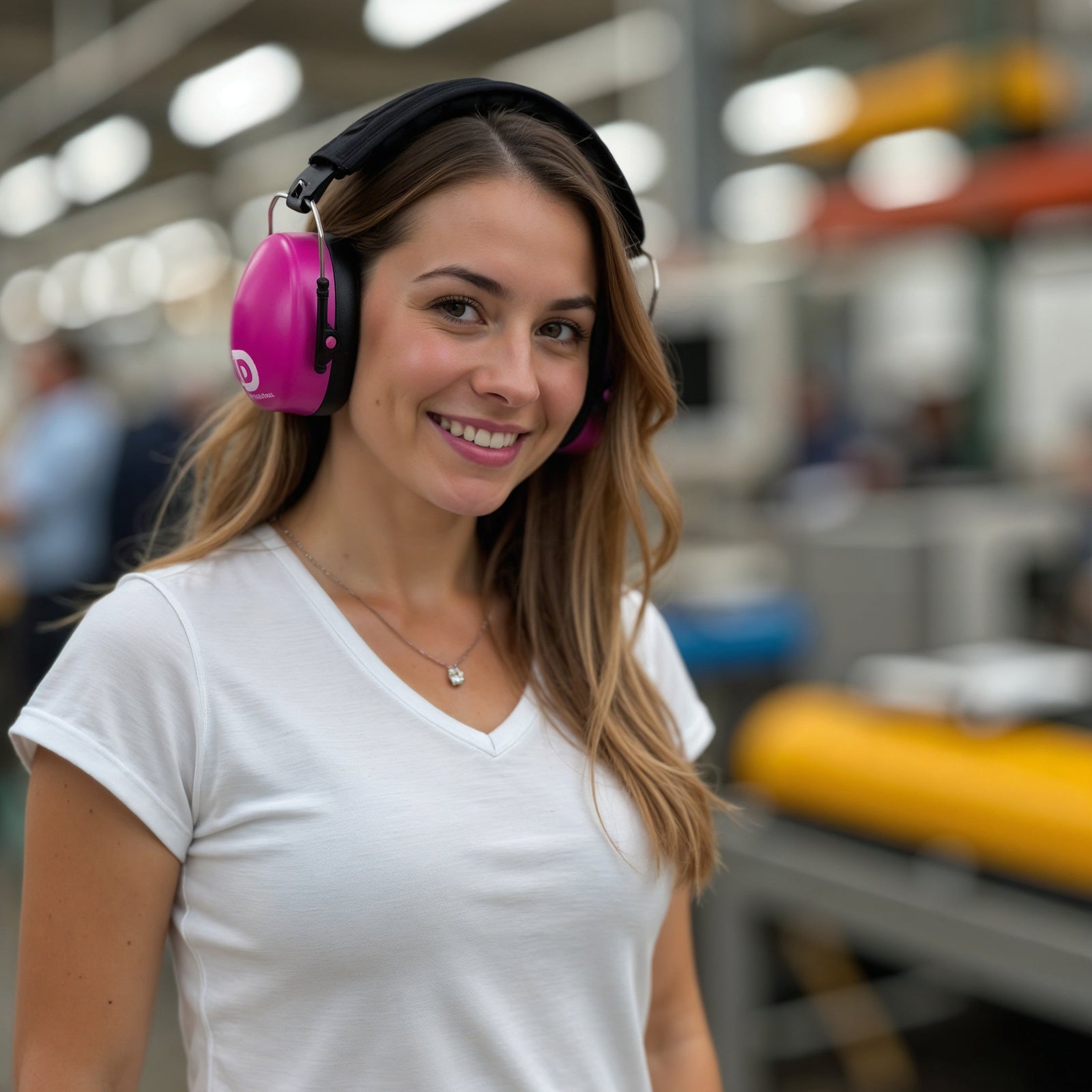
Decibel Defense earmuffs are designed with comfort and fit in mind, helping users achieve reliable protection in real-world conditions. With a high 37 dB Noise Reduction Rating, they provide strong passive protection against loud environments such as shooting ranges, construction sites, industrial workspaces, and power tool use.
Unlike electronic noise-canceling headphones—which are designed primarily for comfort or listening—passive hearing protection like Decibel Defense physically blocks harmful sound energy before it reaches the ear. This type of protection is essential in environments where noise levels can exceed safe exposure limits.
Several features help users achieve a consistent protective seal:
• Adjustable headband to fit a wide range of head sizes
• Deep ear cups designed to fully cover the ears
• Soft padded cushions that create a tight acoustic seal
• Durable construction that maintains proper clamping pressure over time
When hearing protection fits properly, it helps reduce the risk of noise-induced hearing loss, a condition that is permanent and irreversible once it occurs.
Protect Your Hearing Before It’s Too Late
The latest OSHA guidance reinforces what safety professionals have known for years: hearing protection must fit correctly to be effective. Fit testing helps confirm that protection is working, but the first step is choosing reliable, well-designed hearing protection.
Whether you’re working with loud equipment, shooting at the range, operating machinery, or tackling weekend DIY projects, protecting your hearing should be a priority.
Because once hearing is damaged, it cannot be restored—but with the right protection, it can be preserved for a lifetime.